
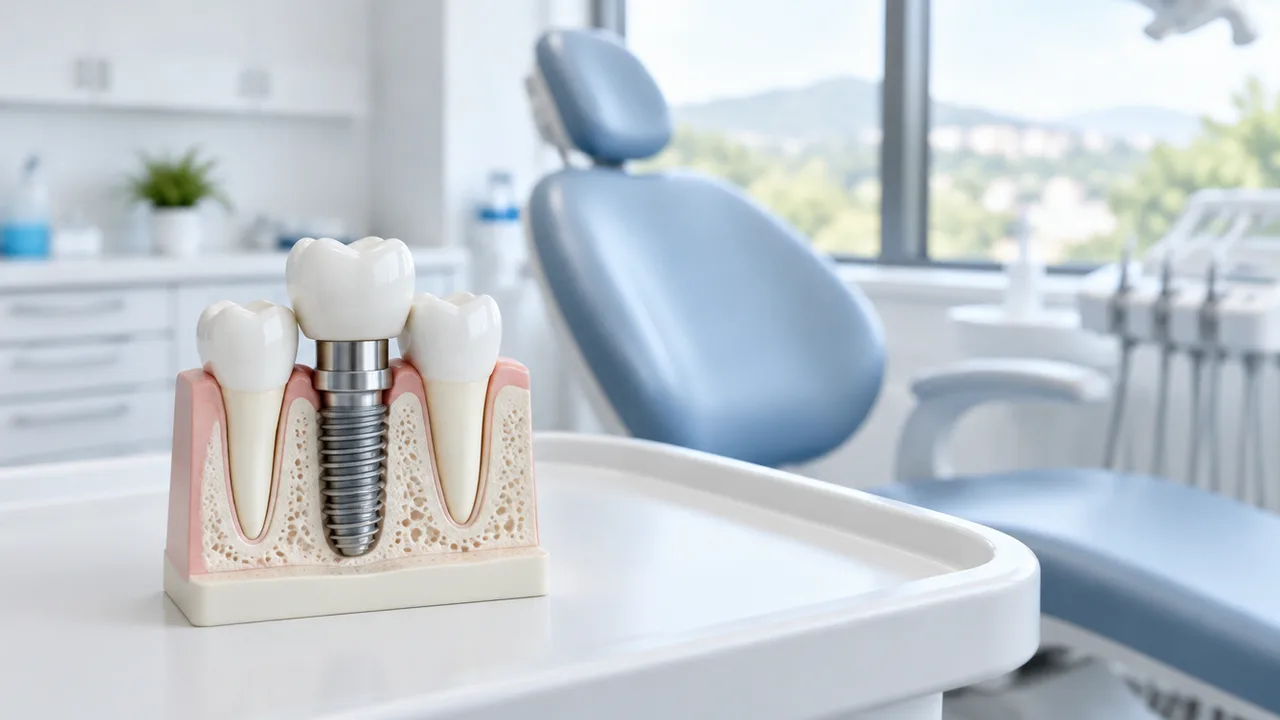
How many times will you actually need to fly out, and what happens at each stage? Getting dental implants in Turkey usually follows the same path as anywhere else: an assessment, a short surgical appointment to place the implant, a healing period of several months while the implant bonds with the bone, and then a second stage where the final crown is fitted. Most of the planning comes down to how those stages fit around your trips.
In short: A dental implant is placed in two main stages with healing in between. You have an assessment and the implant placed on your first trip, heal at home for several months, then return for the abutment and crown. The exact timeline depends on your bone, how many implants you need and whether extra steps such as extractions or grafts are involved.
This guide walks through each step from the patient’s side, including the part most guides skip: what happens once you are back in the UK.
Dental implants in Turkey at a glance
The process for dental implants in Turkey has five stages, and only some of them happen in the clinic. The table below shows where each one takes place. Your dentist confirms the actual timeline once they have examined you.
| Stage | What happens | Where and when |
|---|---|---|
| 1. Remote assessment | You share X-rays and your medical history | From home, before booking travel |
| 2. Examination and scans | Clinical check, fresh X-rays, final plan | First trip, start of your stay |
| 3. Implant placement | The titanium post is placed in the jawbone | First trip |
| 4. Healing | The implant fuses with the bone | At home, several months |
| 5. Abutment and crown | Connector fitted, impressions taken, crown attached | Second trip |
Step 1: Remote assessment before you travel
Before anyone books a flight, the clinic needs a picture of your mouth. This usually means sending a recent X-ray (a panoramic one if you have it) along with a medical history form that covers your general health and any medicines you take.
Treat this as a first look, not a final plan. An X-ray shows a lot, but the dentist still needs to examine you in person, check your gums and look at the bone in more detail before deciding exactly what to do. A clinic that gives you a fixed treatment plan purely from a photo is skipping a step.
It is also a good moment to talk to your own dentist at home. The NHS treatment abroad checklist suggests speaking to a GP, dentist or clinician first, as they can offer a second opinion on whether the treatment is necessary.
Step 2: Examination and scans on arrival
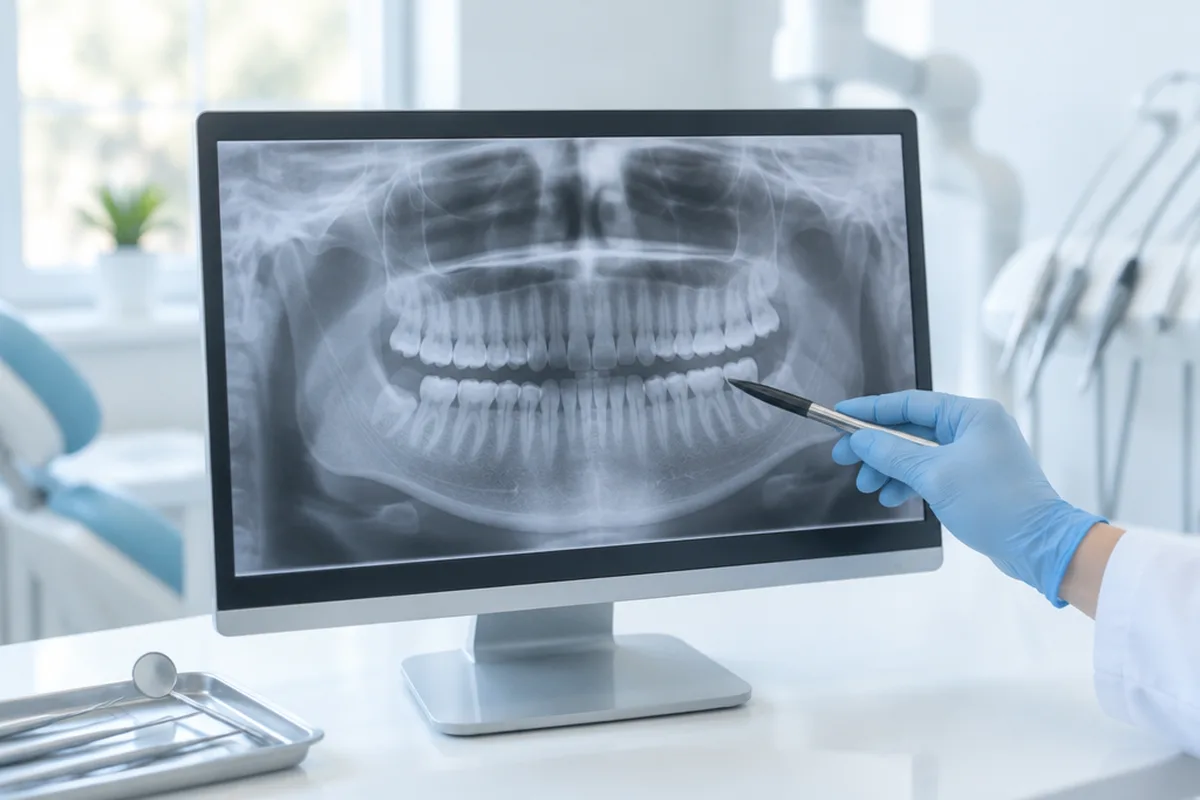
Your first appointment in Turkey is the real assessment. The dentist examines your teeth and gums, takes fresh X-rays and, where they need more detail about the bone, a 3D scan.
This is where the plan becomes specific. The dentist looks at:
- how much bone there is where each implant will go
- the health of the surrounding gums
- whether any teeth need to come out first
- whether you need a bone graft before or alongside the implant
You should leave this appointment knowing what will be done, in what order, and what the second trip will involve. If anything is unclear, ask before the surgery date, not after.
Step 3: Implant placement surgery
The implant itself is a small titanium post that replaces the root of the missing tooth. On our dental implants page we describe how it is placed in the jawbone under local anaesthesia, so the area is numb while you stay awake.
The dentist opens the gum, prepares a space in the bone, places the post and closes the gum with stitches. How long it takes depends mainly on how many implants are being placed and whether extractions or grafting happen in the same session.
How it feels afterwards varies from person to person. Some people describe mild soreness for a few days; others notice swelling or bruising. Your dentist gives you aftercare instructions for the first days, and it is worth keeping them in writing so you can refer back once you are home.
Step 4: Healing and osseointegration
After placement, the implant needs time to fuse with the jawbone. Dentists call this osseointegration, and it is the reason implants are done in two stages. The crown can only go on once the post is firmly anchored.
Healing usually takes several months. The exact length depends on your bone, where in the mouth the implant sits and how many implants you have, so your dentist confirms the timeline for your case rather than working to a standard number.
You spend this period at home, living normally. Depending on where the gap is, the dentist may offer a temporary tooth so you are not left with a visible space while you heal. Ask what kind it is and what you can and cannot eat with it.
Step 5: Abutment, impressions and the final crown
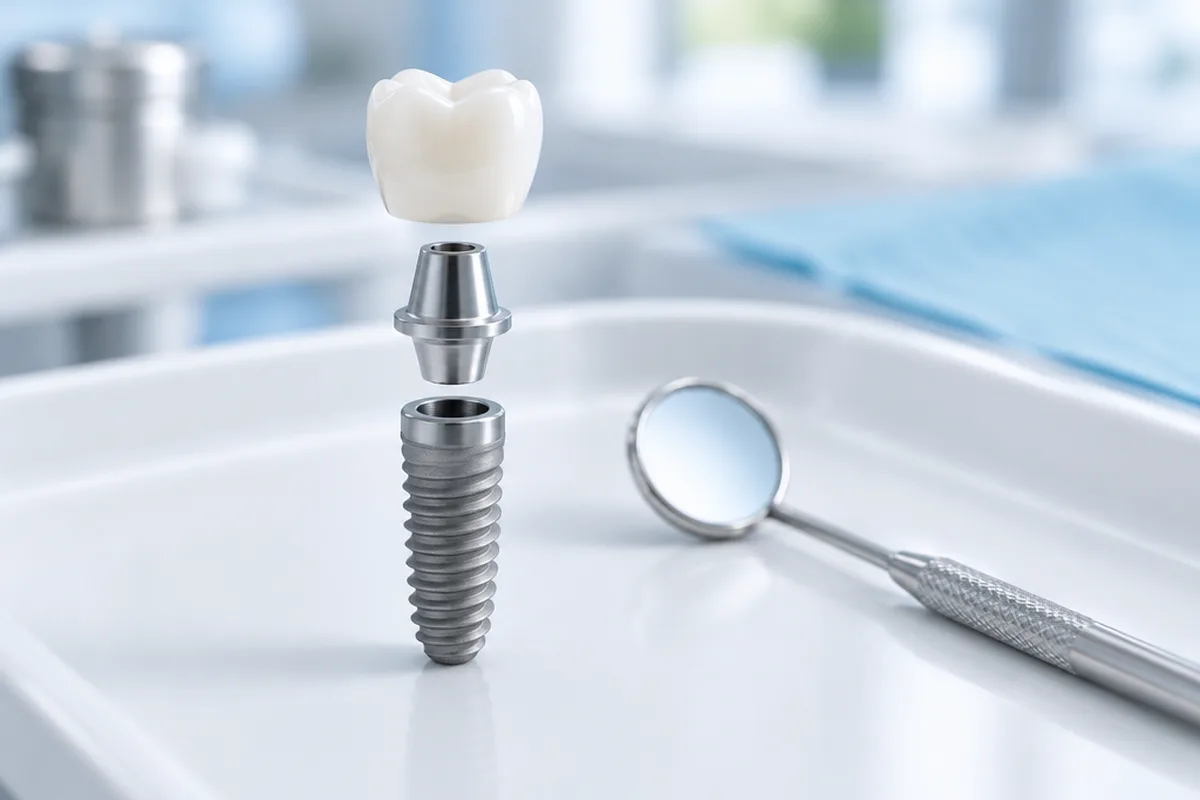
Once the implant has bonded with the bone, you return for the second stage. A small connector called an abutment is attached to the implant. Impressions or a digital scan are taken so the crown can be made to fit your bite and match your other teeth.
The crown is then made in a dental laboratory and attached to the abutment. At International Dental Hospital we use zirconia crowns. Before you fly home, check that your bite feels right and that you know how to clean around the new tooth.
How many trips to Turkey do dental implants usually need?
Because the crown can only be fitted after the implant has bonded with the bone, dental implant treatment in Turkey is usually split across two trips: the first for assessment and placement, the second for the abutment and crown. The months in between are spent at home.
Some cases need more. If teeth have to be extracted and the area left to heal first, or a bone graft is needed before an implant can be placed, the plan may add a visit. Full-arch treatment follows its own sequence as well.
Occasionally a dentist suggests a different sequence for a particular case. If that happens, ask them to explain why and to write the number of visits into your treatment plan. Whatever the plan says, ask the clinic to confirm the number of trips in writing before you book flights.
Who may need extra steps? (bone grafts, extractions, medical history)
Not everyone goes straight from assessment to implant. The most common extra steps are:
- Extractions. A damaged tooth may need to come out first. Sometimes the implant can follow in the same session; sometimes the socket is left to heal.
- Bone grafts. If there is not enough bone to hold the implant securely, the dentist may build it up first. This can add time and, in some cases, an extra trip.
- Full-arch options. For people missing most or all of their teeth, approaches such as all-on-4 and all-on-6 use four or six implants to support a full arch. All-on-4 can be an option for patients with lower bone density.
Your medical history matters here too. Fill in the form fully and honestly, including any medicines, because the dentist uses it to decide whether you are ready for surgery and whether extra steps are needed.
Aftercare once you are back in the UK

This is the part of the journey that clinic guides tend to leave out, and it is the part you live with longest. Once you are home, your implant is looked after by you, your UK dentist and, where needed, the clinic in Turkey. The NHS checklist puts it simply: make sure you are clear about how your aftercare will be coordinated.
Before you leave Turkey, ask for a copy of your records:
- your X-rays and any scans
- the implant system used and its size
- a short treatment summary: what was done, where, and what the second stage involves
- your aftercare instructions in writing
Your UK dentist will need these if they ever have to examine or treat the area. The NHS checklist also recommends asking how your notes will be transferred, because your GP may be involved in your aftercare.
Keep going to your regular check-ups at home. On our implant page we advise regular dental check-ups with professional cleanings, daily brushing and flossing, and avoiding very hard foods. Tell your dentist that you have an implant and share your records at your next visit.
Finally, agree with the clinic what happens if something does not feel right after you get home: who you contact, how quickly they respond and whether a review can happen remotely first. It is far easier to settle this before treatment than to work it out later. The NHS also advises telling your travel insurer about your plans for treatment abroad.
Questions to ask any clinic before booking implants
Whichever clinic you choose, these questions give you a clear view of how they work:
- Who will carry out my treatment, and what are their qualifications?
- What do you need from me before I travel, and what can only be decided in person?
- How many trips will my plan involve, and how long should each one be?
- Which implant system do you use, and will I receive a record of it?
- What will I receive in writing before I leave: X-rays, treatment summary, aftercare instructions?
- Who do I contact if I have a problem once I am back in the UK?
- What are the possible complications for my case, and how are they handled?
The NHS lists some warning signs worth noting: a hard sell, a lack of information, pressure to make a quick decision, and no discussion of complications or aftercare. A clinic that answers the questions above openly is giving you a good sign.
FAQs
How many visits do dental implants in Turkey take?
Usually two trips: one for the assessment and implant placement, and one for the abutment and crown after healing. Extractions, bone grafts or full-arch treatment can change the plan. Ask the clinic to confirm the number of trips in writing before you book travel.
How long does it take for a dental implant to heal?
Healing usually takes several months while the implant fuses with the jawbone. The exact time depends on your bone, the position of the implant and how many implants you have, so your dentist confirms the timeline for your case after examining you.
Who looks after my implant once I am back home?
Day-to-day care is yours: brushing, flossing and regular check-ups with your UK dentist. Take copies of your X-rays, implant details and treatment summary home with you, and agree in advance how the clinic in Turkey will handle any questions or problems after you leave.
What should I bring to my first appointment?
Bring any recent dental X-rays, a list of the medicines you take, your completed medical history form and records of previous dental work if you have them. It also helps to have your travel insurance details to hand, and to tell your insurer about your treatment plans beforehand.
Do I need a bone graft?
Not always. It depends on how much bone there is where the implant will go, which the dentist checks on X-rays and scans during your examination. If bone is limited, options can include a graft before or alongside the implant, or, for a full arch, approaches such as All-on-4.
Talk to us about your situation
Every mouth is different, and so is every implant plan. If you would like to understand how the process could work for you, including what to send us before you travel and how the trips might be arranged, visit our dental implants page and get in touch with our patient team.
For a general overview of the options for replacing missing teeth, including implants, bridges and dentures, the American Dental Association’s missing teeth guide is a helpful independent read.


